Browsed by
Tag: self-talk

Judgment Vs. Discernment, Part 1

Judgment Vs. Discernment, Part 1

by Linda-Ann Stewart

Those of us on the spiritual path generally aim to be nonjudgmental. We know the dangers of being judgmental, and what can happen to ourselves and others when we fall into those negative patterns. But do you really know what judging is? Judgement is when a person places an emotional value of good or bad on an activity, person, or experience. When they see an apple, if they determine that it’s a terrible fruit, then anyone who eats one is also bad. Judgement comes from a feeling of shame and inferiority.

A person who judges others feels inadequate. They feel that they aren’t good enough. Not that what they DO isn’t good enough. But that they are not enough. They probably had parents and an environment that criticized them repeatedly, and they have internalized those statements. The only way they can get some relief from the pain and anguish is to dump their negative feelings on others. They judge others as “bad,” and then, momentarily, they can feel superior to someone or something else.

I once had someone tell me that anyone who likes the color green is stupid and has no sense of taste. Because I had the audacity to disagree, she took it personally, as if my opinion was attacking hers.

Being judgmental becomes a vicious cycle. If a person judges others, you can bet they’re doing the same thing to themselves. Otherwise, they wouldn’t need to find a target to shame. As people who are interested in developing spiritually, we don’t want to judge others, and we certainly want to stop judging ourselves. But too many people on the spiritual path swing too far in the other direction, and don’t utilize their God-given ability to discern what is better for them and what is not so great. There actually is a difference between judgement and discernment.

Copyright 2001, 2012 Linda Ann Stewart
All Rights Reserved
Your Personal Efficient Biofeedback Instrument

Your Personal Efficient Biofeedback Instrument

Are your shoulders ever tense? Do you ever clench your teeth? When you’re entering an uncomfortable situation, do you ever have butterflies in your abdomen? All of these just show that your body is an efficient biofeedback tool. It shows you what you’re thinking and feeling, even if you aren’t aware of it.

Whenever you’re stressed, your back muscles will tighten up in preparation to handle the threat. You may not even know that you’re stressed until you check in with your body.

Mentally or verbally rehearsing an argument after the fact may cause an upset stomach. It may not be happening in real life, but that doesn’t mean that your body doesn’t respond as if it’s happening now.

When you’re worried about something, you may unconsciously frown and furrow your forehead. You may even get a headache from tense neck muscles.

Your body shows you what you’re thinking about. Start listening to what it’s telling you. Check in with your body, and ask yourself, “What am I thinking about?” “What’s going on?” This will give you an indication of where your focus has been driving you.

Next, ask yourself, “What needs to change?” Stress, upset, anxiety, worry just keeps you immobilized. It cuts you off from creativity, inner resources and your problem solving abilities.

As soon as you redirect your attention to what you can do improve things, you instruct your subconscious mind to begin accessing those resources. Your subconscious mind will change its direction and begin seeking a solution. You can help it along by taking time to consciously relax. That will give it more energy to do its work.

The next time you feel out of sorts, reconnect with your body. It’ll give you all the guidance you need.

~ Linda-Ann

Changing Your Life With Affirmations, Self-Talk, and Autosuggestion

Changing Your Life With Affirmations, Self-Talk, and Autosuggestion

I’ve heard some people assert that affirmations don’t work for them, or that they don’t believe in them. Unfortunately, this attitude comes from a misunderstanding about what affirmations are, what they do and how to use them.

Affirmations aren’t a magic wand that will make things change in the blink of an eye. They’re simply a deliberate, constructive use of a process that you’re already using. You talk to yourself all the time, either giving yourself positive feedback or putting yourself down. It’s called self-talk. Affirmations are a way of reprogramming your self-talk.

These statements to yourself are also considered to be autosuggestions. You’re giving yourself hypnotic directives all the time by your self-talk. Napoleon Hill wrote about this concept in his book, “Think And Grow Rich.”

No matter what you call your inner statements, you’re instructing your subconscious mind on what you want. You either do it consciously or unconsciously, deliberately or habitually. The only way to change those directives, and their results, is to change what you say to yourself.

That’s why using affirmations in a specific and regular way makes changes in your life. But you have to use them consistently because that’s the only way to change the way you’ve been thinking.

If you were on a freeway, you wouldn’t expect to go in the opposite direction without braking, stopping, crossing to the opposite lanes, and then accelerating to merge with traffic. Any other action could be disastrous.

You’ve built up momentum going in one direction. And you have to slow down before you can change course. Committing to your decision is vital. If you make a sharp turn on the freeway, while driving at 75 mph, you’re inviting an accident.

It’s the same with autosuggestion. You have to work to slow your old thinking down (braking), and then turn it around to believe something different. As with driving, you move in the direction of your attention.

No matter whether you call it affirmation, positive self-talk, or autosuggestion, the process of changing the quality of your attention is the same. Consistently focus your mind on what you want. That will change your life.

~ Linda-Ann Stewart

Why do I prosper for awhile, then relapse?

Why do I prosper for awhile, then relapse?

Question: Why do I prosper for awhile, then relapse?

Answer: There could be many things getting in the way of your consistent prospering. If you’ve been using affirmations and getting results, see if you’ve eased up on their use.

It could be that you have some old idea about having to struggle or have challenges. Some idea you picked up in childhood could be responsible. Meditating on what old thought patterns are blocking you would be advisable.

I’ve done a lot of internal work myself on this issue. When I stay centered, and don’t get into fear, my prosperity flows. Also, remember to view the Universe as your Source of supply, not the channels it comes through. Considering the channels (such as your job) as the Source is a great way of blocking your prosperity.

I find that affirmations are a wonderful way of breaking through blocks. And affirmations are simply suggestions you give yourself while in a waking or meditative (hypnotic) state. Find some affirmations for prosperity that resonate with you, and repeat them aloud for fifteen minutes each and every day, even after you begin to see results.

Copyright 2003, 2012 Linda Ann Stewart
All Rights Reserved

Book Review – From Sabotage to Success

Book Review – From Sabotage to Success

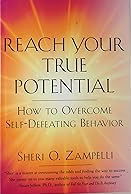
Reach Your True Potential: How to Overcome Self-Defeating Behavior    (previously “From Sabotage to Success: How to Overcome Self-Defeating Behavior and Reach Your True Potential”)

By Sheri O. Zampelli

The author of this book was once a drug-addict, and knows about self-sabotage inside and out. After getting clean, she discovered how affirmations can change a person’s beliefs, thereby changing their reality. This book is an intense and complete look at self-sabotage and ways we can change it so that we can achieve our dreams.

Each chapter ends with activities to help create the life the reader wants, and most chapters include exercises that help to uncover or examine the self-defeating ideas and behaviors that have held the reader back.

Ms. Zampelli explores the different attitudes that undermine success. She also gives comprehensive explanation of why we sabotage ourselves, along with the attitudes and behaviors that hold us back.

The author is a great believer in affirmations (as am I), and gives directions on how to write your own, along with pages of affirmations for different issues.

The thing that sets this book apart is all the exercises, activities, and techniques the reader can use to overcome sabotage and create the life they want. This isn’t just a book of abstract, motivational inspiration, but a book of practical, “do it” knowledge that anyone can use to improve their life.

How Often Should You Repeat An Affirmation?

How Often Should You Repeat An Affirmation?

Question: For how many days, and how many times a day, should you repeat an affirmation?

Answer: You should repeat an affirmation (preferably out loud) for at least five minutes every day, and preferably fifteen minutes a day, for it to begin to impress your subconscious mind. And you should also repeat it whenever you catch yourself thinking negatively about the situation.

You should continue until you see results. It may take as little as a week or as much as several months to change your old thinking. But you should also have faith that your affirmation is making the changes necessary to manifest your desire.

You may not be able to envision how it can happen, but have faith that the Universe and your subconscious have that information.

Copyright 2003, 2012 Linda Ann Stewart
All Rights Reserved

Rewrite Your Life’s Script

Rewrite Your Life’s Script

“All the world’s a stage, and all the men and women merely players.”
~ Shakespeare

You are the writer, actor, director and producer of the play of your life. You often react automatically to the situations in your play. These responses are habits that were often formed during childhood. But you ultimately decide whether you’re going to continue in this rut or choose a new path.

Many times, because of your reaction to a situation, other people apply labels to you that you agree with and maintain. Whenever you retain a label that others’ have plastered you with, you let them define who you are and how you’ll act. You give them the power to assign a role for you to play. One that doesn’t reflect the authentic you.

It only takes a single powerful event at a key moment to make an impression that lasts a lifetime. A gifted, young pianist hits a wrong key during a recital, and her father berates her with, “You’re a failure as a musician.” From that moment on, her fingers fumble on the keys when she plays. She accepts the criticism and it becomes her identity.

A label makes sure that you know your lines and your part when the situation calls for it. You know what’s expected of you, and you do what’s expected, whether it’s good for you or not. If you’re really attached to the label, your subconscious will reject any opinion that conflicts with what you believe about yourself.

For instance, a person could believe that they’re not an artist because “I can’t draw a straight line.” But they have a great eye for design and composition. They won’t believe anyone who recognizes their talent because it goes against their long-held belief. They’ll continue to play the role of frustrated artist until they eliminate their label.

What roles have you accepted that are no longer valid or serving you? They may be so engrained, you aren’t even be aware of them. Consider where you feel frustrated, bad about yourself, or when you belittle yourself. These are great areas to start to peel off your labels and rewrite your roles. Decide how you want your play to change and begin producing a new one.

~ Linda-Ann Stewart

Identify With Your Good

Identify With Your Good

by Linda-Ann Stewart

I once heard someone say, “If you’re not successful, then you’re really working hard at not being successful.” Success, health, happiness, harmonious relationships, creativity are natural states. The Universe always pours all that you need for good into your life.

If you’re not experiencing what you desire, your mind is actively restricting it. The way you feel towards your life, the beliefs based on those feelings, flow forth in statements that limit the expression of your natural resource of good.

“I am a failure,” “I’m sick,” “I can’t do it,” “I don’t belong here.” These are feelings that you have based on past experiences. However, when you identify with these statements, you’re telling the Universe that this is what you continue to want. Whatever you identify with becomes your self-image. Your experience of life has to be consistent with your image of yourself.

A person who wants to be a success, but feels that they can’t do anything right, will sabotage achieving their desires. When you want something better in your life, and it conflicts with your self-image, you undermine your ability to have it.

Whatever you focus on, that’s what you’re telling your Mind that you want. Watch your words. You are literally instructing the Universe what to give you. The silent messages you say to yourself about yourself, the things you say to others, these reinforce the outdated picture you have of yourself.

As a child, you may have been told that you wouldn’t amount to anything. That was a lie. You are an expression of the Universe, and the Universe has all the power within It to create galaxies. The lie was to keep you from remembering that you have the power within you.

One of my clients was a beautiful woman, inside and out. When she was young, her mother convinced her that she was ugly and no one would ever love her. My client changed her self-image when she realized the untruth of that statement, and she began to attract people who valued and appreciated her.

Many times people will fight to hold onto their old self-concept, even when they want something better. Jerry was an artist whose sculptures were critically acclaimed. However, he wasn’t making much money from them, and wanted to be more prosperous. He identified with being a “starving artist,” and was disdainful of those artists who were financially successful.

Because he refused to release his anger at other creatives, and continued to visualize himself as poor, he never realized the wealth that the Universe was urging on him. You can’t have more good without opening the floodgates within, and discharging self-limitations.

What are you identifying with? How do you see yourself? Do you believe that you’re a person who deserves good? What ideas are you acting on that counter what you desire? Notice the “I am” statements you make. They will show you what your self-image is. You can change those declarations by simply stating the opposite every time you catch yourself thinking something negative.

Eventually, the feelings behind the old ideas will transform, because you’re telling them the truth about yourself. Imagine that you have achieved what you want. Now imagine how you’d act, what you’d say to yourself, how you’d dress, what kind of people you’d associate with. What else would be changed in your life?

By aligning your words and ideas with that of a successful person, you can then begin to identify with the good the Universe has been pouring into your life. The floodgates will open, and your life will be overflowing with the goodness that is your natural state.

Copyright 2000, 2012 Linda Ann Stewart
All Rights Reserved

5 Keys To Calm Stress

5 Keys To Calm Stress

When you’re stressed, you go into a Fight or Flight mentality. This reduces access to your brain’s resources, and compromises your ability to think straight. Here are 5 ways to calm down your overactive stress response so you’re able to respond to situations in a more constructive way.


Copyright 2012 Linda Ann Stewart
All Rights Reserved

Book Review – “How To Raise Your Self-Esteem”

Book Review – “How To Raise Your Self-Esteem”

How To Raise Your Self-Esteem: The Proven Action-Oriented
Approach to Greater Self-Respect and Self-Confidence

by Nathaniel Branden

This is a great book, not just for self-esteem, but also to raise self-awareness. This book is filled with strategies and exercises to help the reader not only improve their self-esteem, but increase confidence, self-acceptance, self-respect and authenticity.

The author describes self-esteem as “a feeling of personal competence and a feeling of personal worth…a sum of self-confidence and self-respect.” All of these go into a feeling of value. A person must feel “enough” to feel good about themselves and what they do. And a person with high self-esteem treats others with value and respect.

The author states that living consciously, in the sense of being aware of what they’re thinking and doing, is necessary to high self-esteem. Living consciously means a person learns to listen to themselves and to trust their impressions and decisions.

Other chapters address feelings of guilt, integrating the younger self, living authentically, selfishness, nurturing the self-esteem of others and more. The exercises are easy to do, mainly completing sentences, and the answers can be very illuminating. For any person troubled with feelings of insecurity and inadequacy, I’d recommend this book highly.

~ Linda-Ann Stewart