Browsed by
Tag: empowerment

Book Review – From Sabotage to Success
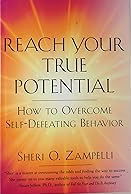
Book Review – From Sabotage to Success

Reach Your True Potential: How to Overcome Self-Defeating Behavior    (previously “From Sabotage to Success: How to Overcome Self-Defeating Behavior and Reach Your True Potential”)

By Sheri O. Zampelli

The author of this book was once a drug-addict, and knows about self-sabotage inside and out. After getting clean, she discovered how affirmations can change a person’s beliefs, thereby changing their reality. This book is an intense and complete look at self-sabotage and ways we can change it so that we can achieve our dreams.

Each chapter ends with activities to help create the life the reader wants, and most chapters include exercises that help to uncover or examine the self-defeating ideas and behaviors that have held the reader back.

Ms. Zampelli explores the different attitudes that undermine success. She also gives comprehensive explanation of why we sabotage ourselves, along with the attitudes and behaviors that hold us back.

The author is a great believer in affirmations (as am I), and gives directions on how to write your own, along with pages of affirmations for different issues.

The thing that sets this book apart is all the exercises, activities, and techniques the reader can use to overcome sabotage and create the life they want. This isn’t just a book of abstract, motivational inspiration, but a book of practical, “do it” knowledge that anyone can use to improve their life.

Rewrite Your Life’s Script

Rewrite Your Life’s Script

“All the world’s a stage, and all the men and women merely players.”
~ Shakespeare

You are the writer, actor, director and producer of the play of your life. You often react automatically to the situations in your play. These responses are habits that were often formed during childhood. But you ultimately decide whether you’re going to continue in this rut or choose a new path.

Many times, because of your reaction to a situation, other people apply labels to you that you agree with and maintain. Whenever you retain a label that others’ have plastered you with, you let them define who you are and how you’ll act. You give them the power to assign a role for you to play. One that doesn’t reflect the authentic you.

It only takes a single powerful event at a key moment to make an impression that lasts a lifetime. A gifted, young pianist hits a wrong key during a recital, and her father berates her with, “You’re a failure as a musician.” From that moment on, her fingers fumble on the keys when she plays. She accepts the criticism and it becomes her identity.

A label makes sure that you know your lines and your part when the situation calls for it. You know what’s expected of you, and you do what’s expected, whether it’s good for you or not. If you’re really attached to the label, your subconscious will reject any opinion that conflicts with what you believe about yourself.

For instance, a person could believe that they’re not an artist because “I can’t draw a straight line.” But they have a great eye for design and composition. They won’t believe anyone who recognizes their talent because it goes against their long-held belief. They’ll continue to play the role of frustrated artist until they eliminate their label.

What roles have you accepted that are no longer valid or serving you? They may be so engrained, you aren’t even be aware of them. Consider where you feel frustrated, bad about yourself, or when you belittle yourself. These are great areas to start to peel off your labels and rewrite your roles. Decide how you want your play to change and begin producing a new one.

~ Linda-Ann Stewart

Book Review – Bradshaw On: The Family

Book Review – Bradshaw On: The Family

Bradshaw On: The Family:  A New Way of Creating Solid Self-Esteem
by John Bradshaw

The author states that emotions are “energy in motion,” and valuable to us. This is only one of the many eye-opening concepts in this book.

Mainly, this book is written for people who have experienced dysfunctional homes, such as alcoholism or any sort of abuse in their childhood. Its information helps to identify and understand how the dysfunction affected them as children, and how it continues into adulthood.

Understanding is the first step to being able to move beyond the self-punitive and self-destructive habits that they may have as adults. But it’s also helpful for those who grew up in so-called “functional” homes, since in most homes there’s some sort of dysfunction.

The author writes a lot about rules, roles and how they affect an individual. He also addresses the family “trance,” saying that we accept ideas in that state and continue to operate with those concepts until the trance is broken.

This book was based on John Bradshaw’s television series of the same name. The series was more impromptu and as the author says, “lacked detail.” This book guides the reader into a better understanding of what they’re doing and why, and why their life may not be working.

Book Review – Guilt Is the Teacher, Love is the Lesson

Book Review – Guilt Is the Teacher, Love is the Lesson

Guilt Is the Teacher, Love is the Lesson
by Joan Borysenko, Ph.D.

Healthy guilt lets us know when we’ve violated our principles, formulates our conscience, and teaches us how we can do better in the future. However, when healthy guilt gets twisted into shame, it becomes toxic to the mind, body, soul and spirit. The author calls shame or unhealthy guilt as an “autoimmune disease.” With it, we reject our worth and very being.

This book is a valuable asset for anyone who is carrying around the burden of shame or unhealthy guilt. It begins by explaining the difference between healthy and unhealthy guilt, and details some of the characteristics of shame. Once a person recognizes the difference, they can do something about it.

The author explores the inner child’s role in a person’s life, and how the joy of the inner child has become suppressed through shame. Using questions, exercises and meditations, the reader learns to free their inner child from the bonds of shame. Ms. Borysenko also addresses the subject of forgiveness, stating that we forgive the person but not the offense.

This is a book of self-discovery and personal growth, that clarified for me how toxic shame can be. As we learn to love ourselves, letting go of the punishment that shame brings us, then we are able to move forward in our spiritual evolution.

Book Review – “How To Raise Your Self-Esteem”

Book Review – “How To Raise Your Self-Esteem”

How To Raise Your Self-Esteem: The Proven Action-Oriented
Approach to Greater Self-Respect and Self-Confidence

by Nathaniel Branden

This is a great book, not just for self-esteem, but also to raise self-awareness. This book is filled with strategies and exercises to help the reader not only improve their self-esteem, but increase confidence, self-acceptance, self-respect and authenticity.

The author describes self-esteem as “a feeling of personal competence and a feeling of personal worth…a sum of self-confidence and self-respect.” All of these go into a feeling of value. A person must feel “enough” to feel good about themselves and what they do. And a person with high self-esteem treats others with value and respect.

The author states that living consciously, in the sense of being aware of what they’re thinking and doing, is necessary to high self-esteem. Living consciously means a person learns to listen to themselves and to trust their impressions and decisions.

Other chapters address feelings of guilt, integrating the younger self, living authentically, selfishness, nurturing the self-esteem of others and more. The exercises are easy to do, mainly completing sentences, and the answers can be very illuminating. For any person troubled with feelings of insecurity and inadequacy, I’d recommend this book highly.

~ Linda-Ann Stewart

The Principle of Appreciation, Part 2

The Principle of Appreciation, Part 2

by Linda-Ann Stewart

If criticism diminishes life-force, then why doesn’t it work when you criticize something you don’t want in your life? For example, if you condemn the fact that you have so little money, why don’t you get to experience the opposite, more money?

Because you’re contracting the very energy of money. You’re decreasing the value of that which you want. Where your emotional attention goes, energy flows. So you’re creating more of the same lack by focusing on and condemning that area. You’re making your lack grow.

To create more of what you want, appreciate what you have. Even if you only have a penny, praise that penny. I get excited when I find pennies on the ground, in parking lots, on the floor of a store. When I turn the attitude around, and think, “So what, it’s only a cent,” I discover that they don’t appear for me. My overall prosperity also suffers.

Because of my appreciation of the smallest of coins, I’ve found not only pennies, but nickels, dimes, quarters, and one, five and twenty dollar bills.

The principle is the same no matter what you desire in your life. For relationships, give thanks for your relationship with yourself. If you want better health, find something that’s good about your body, like your immune system.

To find a better job, give thanks for something beneficial in your present job. Find something that you value in your situation. By discovering something of worth, you allow it to appreciate.

Because Cricket took the time to improve her self-image, she gained the confidence to become a marketing director. No matter how miniscule the thing is that you praise, keep your attention on it.

Don’t waste your valuable energy on being critical of that area. Condemning it will only bring you more of what you don’t want. By appreciating what you have now, you allow it to expand and blossom into what you really want in your life.

Copyright 2000, 2012 Linda Ann Stewart
All Rights Reserved

The Principle of Appreciation, Part 1

The Principle of Appreciation, Part 1

by Linda-Ann Stewart

Cricket wanted to improve her self-image. Though she hated her appearance, she knew she had to find something to appreciate about her looks to be able to increase her self-concept. After trying desperately to find something she could value about herself, she decided that she liked her hair a little bit.

Knowing that praising something made it improve, she began to praise her hair. Every morning and every evening, she looked in the mirror and told her hair how much she approved of it. She liked its thickness, its length, its health. Over the next few months, her hair began to respond by beginning to curl for the first time in her life.

Whatever you appreciate in your life expands. Being grateful means you are appreciative of benefits you’ve received. As a matter of fact, the definition of both gratitude and appreciation is “thankfulness.” But the definition of appreciation goes further.

Appreciation also means recognizing the high value of something. In addition, it signifies an increase in value. So when you appreciate something in your life, not only are you recognizing its worth, but you’re causing that worth to multiply.

Remember how you felt when someone appreciated your efforts. Didn’t you want to do more for them? Now think of how you felt when someone criticized you. Didn’t it make you angry, and not want to help that person in any way? Didn’t it make you feel like crawling into a hole and licking your wounds? Criticism contracts energy, while appreciation allows it to expand.

Test this for yourself. Take two plants. For a month, treat them exactly alike. Water and fertilize them the same, make sure they get an equal amount of sun. However, praise one of them, and criticize the other.

Experiments like this have been done over and over, and the results are the same. The plant that’s praised will grow larger, with greener leaves and more roots. The other one will be stunted and wither.

Copyright 2000, 2012 Linda Ann Stewart
All Rights Reserved

Anger As A Constructive Motivating Force

Anger As A Constructive Motivating Force

Anger can be a positive force for good in your life. When you are able to stay conscious enough to recognize anger is a signal, you can rationally decide how to address the issue. Here are 5 questions you can ask yourself so that something constructive can develop from the situation. For explanations of these questions, watch the video.

1. Are they a frequent offender who isn’t valuing you?
2. Do you want to cut the ties with this person?
3. Did they step over an important line for you or were they aware of it?
4. Were you somehow culpable in precipitating the offense?
5. Was it a misunderstanding? Did you filter what they did through a sensitive area of your own?


Copyright 2012 Linda Ann Stewart
All Rights Reserved.

Compassion For The Less Fortunate Promotes Success And Happiness

Compassion For The Less Fortunate Promotes Success And Happiness

Some positive thinking philosophies tell you to avoid charitable works and those who are poverty stricken. The theory is that you might get sucked into their consciousness, and lose your empowered viewpoint. That you could become sympathetic and then part of the problem. Or that you wouldn’t hold the “needy” as powerful enough to heal their wounds or overcome their problems. Somehow, leaving them to their own devices is supposed to empower them to “pull themselves up by their own bootstraps.”

However, I’ve observed people who follow this idea tend to become judgmental and contemptuous about those who are less fortunate. This doesn’t fulfill the spirit of the ideal. Instead, it creates a callousness that negatively impacts their character and undermines the positive attitude that they mean to cultivate. It tends to breed a sense of arrogance and superiority.

Insulating yourself from others’ suffering may mean that you don’t get the opportunity to develop compassion. In a recent study, those who are in the lower socio-economic classes are more responsive to suffering and more compassionate than those in the more affluent class.

The UC Berkeley researchers conjecture that the upper classes aren’t “coldhearted,” it’s just that they haven’t had to deal with the challenges the lower classes have. Therefore, their theory is that the upper classes don’t recognize the distress expressed by people.

Becoming aware of when others are experiencing distress, suffering and anxiety is the first step to becoming more compassionate. With compassion, you can be aware of others’ emotions without getting drawn into the problem. You can then choose a response that can best support and empower the sufferer.

Emotional Intelligence, which has been called more important than I.Q., is the ability to perceive and label yours and others’ emotions. It’s said that this skill is necessary for you to fulfill your full potential in your personal and professional life. So it’s even good for your success in life to be more aware of how other people are feeling.

Compassion opens the heart, reduces stress, promotes success and encourages happiness. Being concerned about the well being of others improves your own.

Inspired by the article: Lower Classes Quicker to Show Compassion in the Face of Suffering

~ Linda-Ann Stewart


Are the personal growth methods teaching different things?

Are the personal growth methods teaching different things?

Question: With all the self-development and personal growth methods available, are they all teaching something different?

Answer: Whether it’s yoga, est, reiki, hypnotherapy, EFT, affirmations or whatever, all spiritual development techniques have a similar goal in mind. That goal is to help you open yourself up to a greater flow of Spirit.

It doesn’t matter if it’s a physical, mental or emotional method, it’s designed to change your conception of yourself, your body or your world. That change helps to release resistance to allowing more of Universal good into your life.

They may go about it differently, and state it differently, but when you change your perspective, and have an intention to spiritually evolve, the result is more joy, peace and harmony.

Copyright 2003, 2012 Linda Ann Stewart
All Rights Reserved